Architecture
Overview
The high-level architecture of a broadband utility is based on a zoning model from best practices of Carrier Neutral Providers (CNP) and supports emerging Cloud, 5G, IoT and Industry 4.0 networking requirements. For each zone point of delivery, suitable locations need to be identified but range from access locations cabinets pedestal or pole mounted to regional datacenters. Building flexibility to support hardware isolation for secure multi-tenancy while enabling subscriber mobility between fixed and wireless networks could save both money and time, as well as improve the ability to attract new Mobility tenants. Note that while most cities have a limited number of fixed operators, they have on average more mobile and retail operators and as it becomes more difficult to secure new spectrum or build infrastrucures, new entrants will prioritize shared infrastructure solutions over building their own private infrastructure. This represents the opportunity for the broadband data utility herein described in this document to provide a unified fabric for a unified network and compute utility.
Zones Definitions
The recommended zoning model for physical and logical assets starts with a set of services definitions, service-levels, distance, latency and performance requirements. These zones are also used to specify POP/NNIs, equipment types per zone, availability, utilization, operational processes, reporting regimes, data models and API and well as financial metrics (Revenue per zone) as part of the infrastructure blueprint.
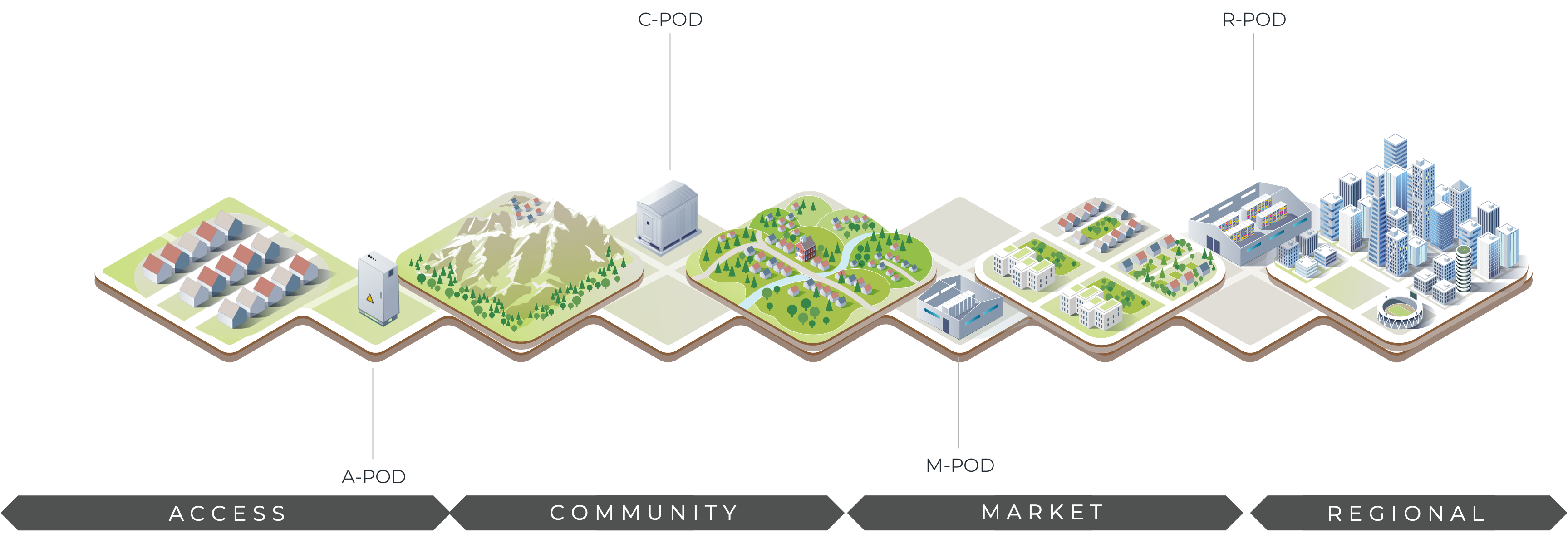
This introduces the recommended a zoning model for physical and logical assets and starts to set the services definitions, service-levels, distance, latency and performance requirements. These zones are also used to specify POP/NNIs, equipment types per zone, availability, utilization, operational processes, reporting regimes, data models and API and well as financial metrics (Revenue per zone) as part of the infrastructure blueprint.
The Zoning architecture and requirements follow the best practices found in standard forums (MEF, IETF, ITU) and open forums and foundation initiatives (TIP, OpenCompute, ONF).
Given the objectives of multi-tenancy and subscriber mobility between fixed, wireless and compute portions of a shared broadband utility infrastructure it is essential to set requirements and guidelines used to determine proper zones and operational reponsibilities between actors of a project.
Zoning Guidelines
Each broadband utility deployment is unique in terms of geospatial constraints, resource availability and market dynamics. Accordingly, many factors will need to be computed to identify an optimal solution that can be both technically sound, future proof and while remaining cost effective. The proposed model/graph makes it possible to understand the various relationships between zones in order to implement the optimal zoning strategy compliant with all requirements and ensure use of the proper interfaces that can guarantee the needed interoperability between the zones to support federated networks made up from different ownership and actors providing seemless integration for the consumers of the utility.
| Zones | Access | Community | Market | Regional |
|---|---|---|---|---|
Zone # |
1 |
2 |
3 |
4 |
Purpose |
Access Service Residential, SME, Wireless |
Community Connectivity, Network Services, Service Providers |
Market Hubs Interconnections |
Regional Content and Applications |
Network Type |
Last-Mile / Access Network |
Middle-Mile Metro & Core Network |
Exchange/DC Interconnect |
Long-haul Network & Core Routing |
Distances |
~ 10-40km |
~ 40-500km |
~ 80km-1000km |
> 500km |
Technology |
XGS-PON/ETHERNET |
CARRIER ETHERNET |
PACKET/OPTICAL |
PACKET/OPTICAL |
Standards |
|
|
|
|
Zone Requirements
The broadband utility identifies key requirements, service definitions, and data models per zone and creates a set of engineering requirements that will be assessed for compliance per zone.
| Zones | Access | Community | Market | Regional |
|---|---|---|---|---|
Zone # |
1 |
2 |
3 |
4 |
Services |
Best Effort |
High Quality |
Protected |
Transport |
Services Interconnect |
CPE |
ETHERNET UNI/NNI |
ETHERNET UNI |
OTN NNI |
OAM |
|
|
|
|
Maximum Latency (ms) |
0.03 |
0.15 |
5 |
30 |
Maximum Oversubscription Ratio |
4:1 |
8:1 |
16:1 |
96:1 |
λ Sharing Ratio |
N/A |
1:1 |
10:1 |
10:1 |
Fiber Sharing Ratio |
32:1 |
1:1 |
18:1 |
80:1 |
The engineering requirements and guidelines for each zone introduced in future sections may vary per region. They are considered “best practices” based on years of experience consulting to various CNPs, CSPs, MNOs, MSOs and ICPs. It represents our recommendations for Internet, 4/5G, IT and Cloud requirements. IOT and Wireless IOT market and technologies could benefit from these “best practices” per zone and per project. Meeting standards, and high level requirements for each zone is mandatory and reference guidelines are provided as a blueprint path to contractual compliance.
Summary
In summary, zoning is the proposed way to segment, analyze and communicate broadband utility projects in FTTH, middle-mile or long-haul vision to stakeholders, sponsors and community leaders. This approach is now employed by a large number of global shared infrastructure projects.
As stated earlier, the industry best practices are taken from various market leaders, market forums and standards’ organizations. Each stakeholder in a given project assumes its share of risks and is responsible for pushing new technology and new practices into new areas to provide project efficiencies. These investments are moving closer and closer to the edge. Rakuten and Dish are examples of operators moving mobile cloud to the edge while Amazon AWS, Microsoft, and Google are are examples of datacenter operators embracing moving utility computing to the edge. Offering wholesale Data, Mobility and Computing infrastructure and services should provide a long-term revenue model for broadband utilities. Of course, not all communities can afford to build universal access including mobile wireless services, so targeting just utility data services via FTTx or fixed broadband wireless, as a subset of this guide, is also an option that requires less planning, less capital and can be deployed much more rapidly.